How a clinical meeting works at our clinic — making multidisciplinarity visible
Every week our team stops to discuss cases together. It's not a formality — it's what makes your treatment plan thought through by an entire team, not by a single professional. We show you how it works from the inside.
Founder and Technical Director
When someone arrives at our clinic for the first time and hears the expression "multidisciplinary approach", the reaction is often sceptical. And rightly so. In many clinics, "multidisciplinary" just means this: several specialities are available in the same physical space. Each professional does their work separately, and it's the patient who has to put the pieces together.
At our clinic, we decided from the start that multidisciplinarity had to be real — not decorative. That translates into a practice that may seem small, but that changes everything: a weekly, in-person clinical meeting where the whole team discusses cases.
This article is an inside look at how this meeting happens, why we do it, and how it translates into better care for those who come to us.
What, concretely, a clinical meeting is
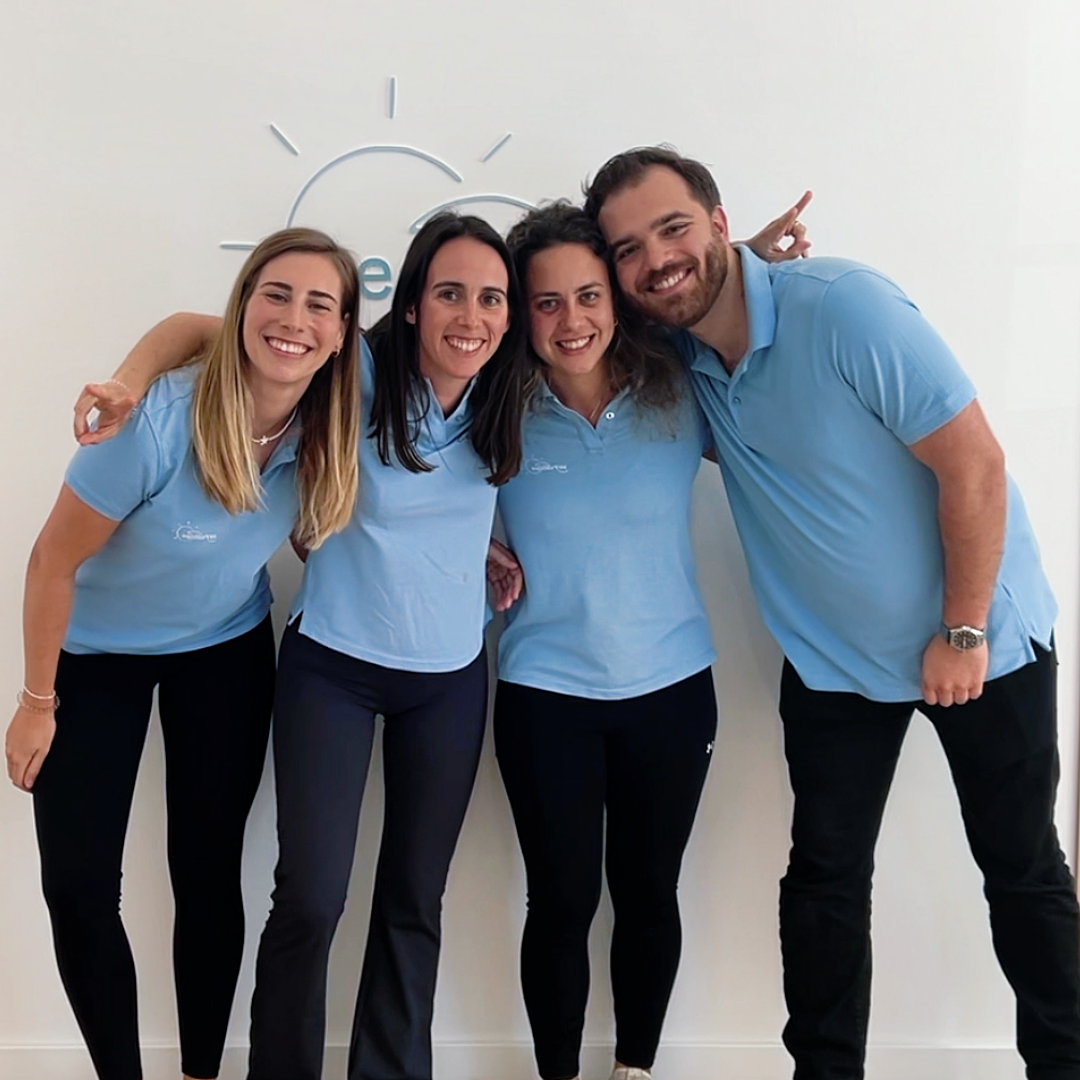
Every week, at a fixed time, the team stops. Physiotherapists, osteopath, Chinese medicine professional, clinical pilates instructor. About 40 minutes. No phones. No parallel agenda.
The agenda is simple and has three parts:
- Complex new cases — recent patients whose condition is complex, and who benefit from discussion before defining the treatment plan
- Evolving cases — patients already in treatment but where something has changed (improved less than expected, new symptom appeared, new exams)
- Shared cases — patients being followed by more than one professional, where approaches need to be aligned
Each case takes between 5 and 10 minutes. Whoever brings the case briefly explains the picture, what they observed, their clinical hypothesis, and their specific doubt. The other colleagues comment, ask questions, propose alternative perspectives.
It's not a conference. There are no formal presentations. It's a clinical conversation between professionals who respect each other and want the best for each patient.
Why this makes a real difference
The first reason is the most obvious: no professional, however experienced, can have the complete perspective on every condition.
A physiotherapist sees the world through physiotherapist's eyes — and that's a strength, but also a limitation. An osteopath sees fascial and mechanical patterns that escape other specialities. A Chinese medicine professional looks at the patient in terms of systemic balances and imbalances. When the same case passes through these different lenses, information emerges that none of the professionals would have alone.
Here's a concrete example, without identifying the patient:
A patient with 4 years of chronic low back pain arrives at the clinic. The initial physiotherapy assessment identifies a clear mechanical pattern: deep core inhibition, reduced hip mobility, thoracic breathing pattern. Initial plan: physiotherapy 2x/week for 6 weeks.
At the clinical meeting, when presenting the case, the osteopath raises an observation: the patient also mentions difficult digestion and a feeling of "being always tense". She suggests there may be a significant visceral component, and proposes a complementary osteopathic assessment.
The Chinese medicine professional adds that the pattern described — low back pain + systemic tension + altered digestion — is coherent with chronic stress that benefits from acupuncture.
The final plan, decided together, comes to include physiotherapy, a visceral osteopathy session, and biweekly acupuncture. In 8 weeks, the patient has much greater improvement than she would have had with isolated physiotherapy.
This case is representative. The clinical meeting doesn't invent diagnoses — it just ensures that each patient has their condition viewed through several clinical lenses before the plan is defined.
The second reason: continuity of knowledge
There's a less obvious but equally important advantage: the clinical meeting is where knowledge circulates between professionals.
When a physiotherapist finds an interesting case and discusses it at the meeting, all colleagues learn from it. When the osteopath shares a technique that worked particularly well, the other professionals incorporate that perspective. Over months and years, this creates a culture of continuous learning that benefits all patients — not just those whose cases are discussed.
In clinics where each professional works in isolation, this effect doesn't exist. Individual knowledge grows, but collective knowledge doesn't.
And who gains from this?
The direct answer: the patient gains.
When your initial assessment is done by a professional who has access to the whole team's perspective, the plan you receive is better. Not because the individual professional is better, but because they're supported by a system that sees more.
When, during treatment, a doubt arises — a new symptom, an unexpected response, pain that doesn't yield — that doubt is discussed at the clinical meeting. It's not the professional alone trying to solve it. It's the team.
When your case indicates that you would benefit from more than one speciality, the suggestion doesn't come from "the clinic's marketing" — it comes from a substantiated, discussed and aligned clinical decision. And when you come to be followed by more than one professional, those professionals know what each is doing, and adjust to each other.
What this is not
It's important to be clear about what the clinical meeting is not:
- It's not an administrative meeting. Scheduling questions, appointments, fees — all of that is handled at other times
- It's not an academic conference. There are no long presentations or literature reviews. It's practical clinical conversation
- It's not a disguised way to "sell more sessions". Decisions are clinical. When the plan involves an additional speciality, it's because the team understands that this clinically benefits the patient — and never the other way around
- It's not optional. It's part of how the clinic works, not an extra activity that happens when there's time
Why we decided to do this
When we started the clinic, we had a conviction: the best clinics we knew, whether in Portugal or abroad, all had something in common — it wasn't the equipment, nor the space, nor the price. It was the way the professionals worked together.
Complex patients, in particular, benefit immensely from this way of working. And those are the patients who most often arrive at our doors after isolated treatments that didn't work.
The weekly clinical meeting is the concrete mechanism that makes this philosophy operational. Without it, "multidisciplinary" is just a word on the website.
Conclusion
Real multidisciplinarity costs time. 40 team minutes per week, outside consultation time, without direct billing — in pure management terms, it's "inefficient". But it's exactly this seemingly lost time that makes your treatment plan different.
Next time you read "multidisciplinary approach" on any clinic's website, you can ask the question that matters: "do you hold regular team clinical meetings, or does each professional work in isolation?" The answer tells you almost everything.
Here, we do. Every week. And that's what defines us.